


Pros
- No dentist visit
- Affordable
- Non-invasive
- Durable
- Easy to use
Cons
- Not covered by insurance
- Temporary solution

Tired of feeling self-conscious about your teeth? You’re not alone, and you don’t have to settle.
From quick fixes like snap-on veneers to long-term solutions like dental implants, there are options that fit every budget and need.
We’ll break down the best ways to tackle chipped, decayed, or missing teeth so you can regain your confidence and smile freely.
Whether you’re self-conscious about chipped teeth, gaps, or missing teeth, there are options to help repair your smile.
We’ve compiled a list of possible solutions based on your dental issue in the table below:
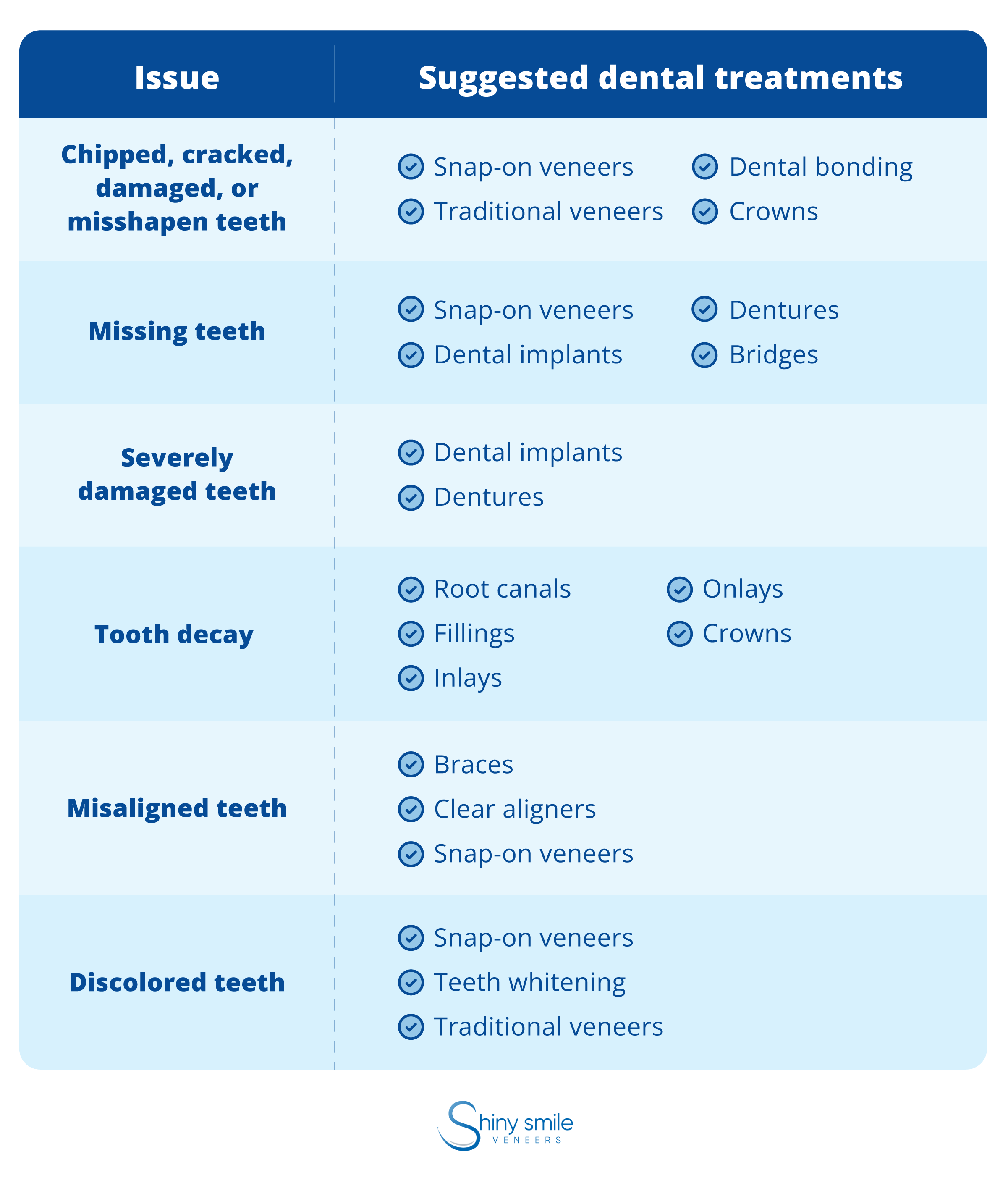
Some cosmetic dental issues can be fixed with the following treatment options:
Snap-on veneers are like a miracle for those who want a quick, non-invasive solution to cover missing or damaged teeth. They fit over your teeth without drilling or a dentist’s visit.
This solution is perfect if you’re looking for something fast and budget-friendly. With options ours at Shiny Smile Veneers, you can get a set from home for around $570, which includes a payment plan if needed.
These veneers last up to five years and can be worn daily.
Our veneers offer an affordable way to upgrade your smile.

Best for: Those looking for a permanent, high-quality cosmetic solution.
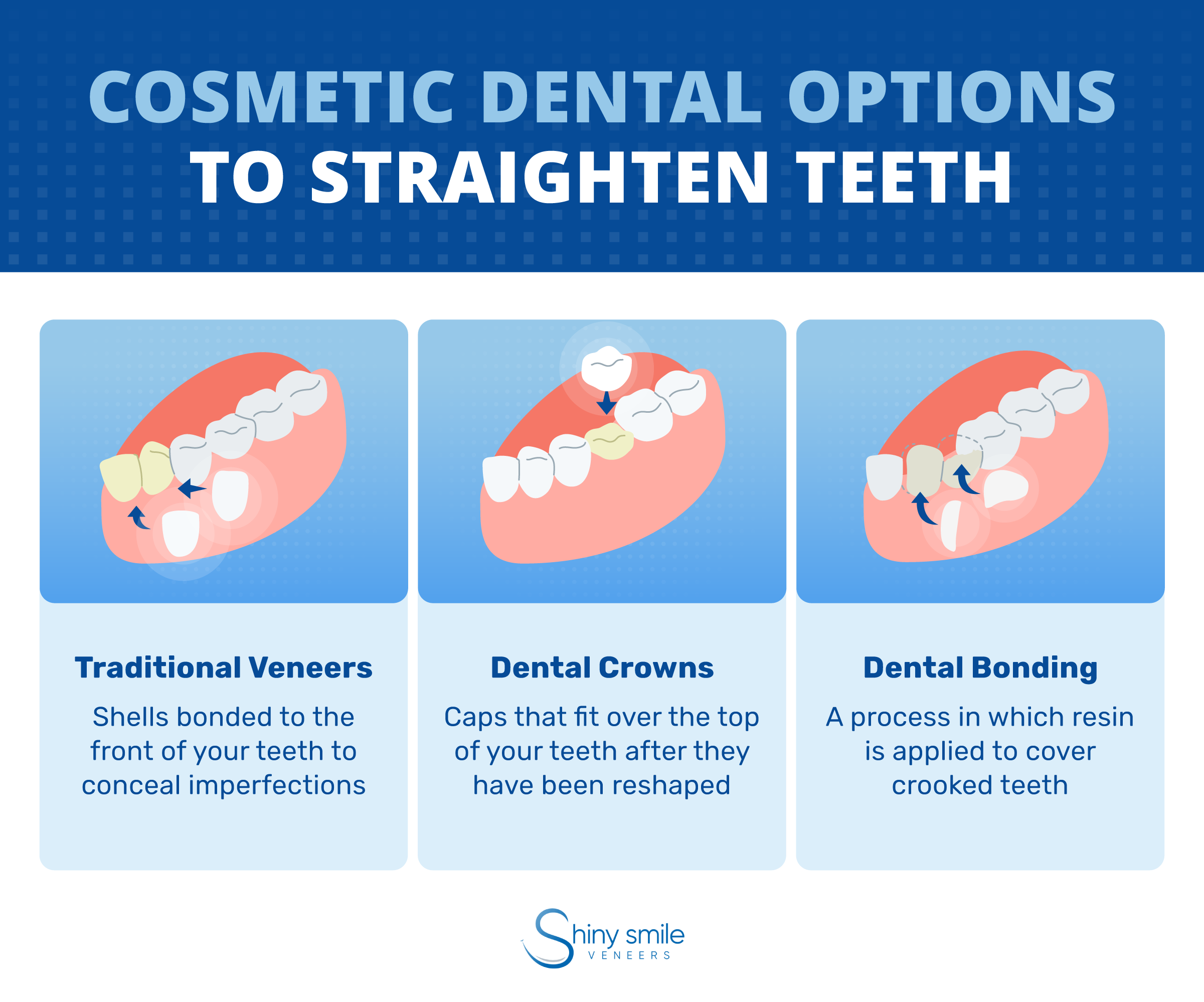
Traditional veneers are thin shells that offer a permanent fix for chipped, cracked, or discolored teeth.
Made of either porcelain or resin, they bond to the front of your teeth after removing some enamel.
While more expensive and irreversible, porcelain veneers can last up to 15 years. However, be prepared to pay anywhere from $925 to $2,500 per tooth.
Dental bonding is a quick, inexpensive way to fix minor cosmetic issues like gaps or small chips and close spaces between your teeth.
In a single visit, a dentist can apply a tooth-colored resin to your teeth.
The procedure takes just 30 to 60 minutes per tooth and is usually covered by insurance. It costs between $100 to $400 per tooth.
Want a brighter smile? Teeth whitening can help remove stains from coffee, wine, or smoking.
Whether done at the dentist’s office or at home, results can vary. In-office treatments are quicker but more expensive, ranging up to $1,000.
At-home kits are a more affordable option and this is one of several ways to get teeth whiter quickly. Over-the-counter products cost between $20 and $100.
If the damage to your teeth is something more than discoloration or stains, then it cannot be fixed with a cosmetic treatment.
Here are some ways you can fix various dental issues:
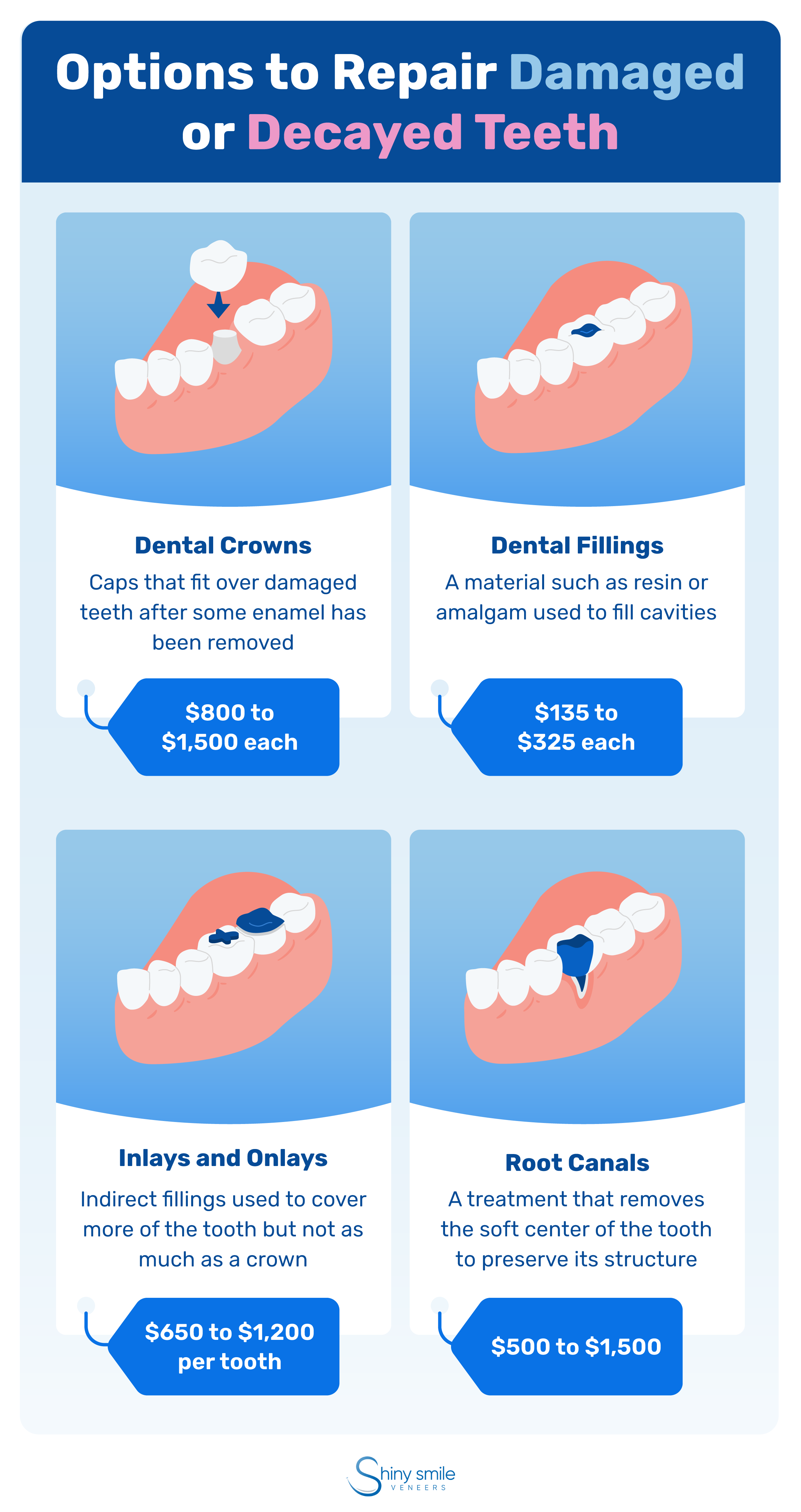
Crowns act as protective caps for damaged or decayed teeth.
After removing some enamel, the dentist places a crown over the affected tooth, restoring both its appearance and function.
Crowns last between 5 and 15 years and cost $800 to $1,500 per tooth.
Fillings are the go-to for cavities. They replace decayed parts of your teeth with materials like composite resin, porcelain, or even gold.
The procedure is quick, and fillings can last for over a decade.
Composite fillings, which blend in with your natural teeth, cost between $135 and $325.
Inlays and onlays are ideal when the tooth is too damaged for a filling but don’t need a full crown.
Made of porcelain, resin, or gold, they offer a middle ground. The procedure requires two visits but lasts up to 30 years.
Inlays and overlays can cost between $650 to $1,200 per tooth, and your insurance may cover it.
Root canals are necessary if decay has reached the tooth’s pulp. After removing the damaged pulp, the dentist seals the tooth to prevent further infection.
Root canals cost between $500 and $1,500 and can be fully covered by insurance.
If you’re suffering from missing teeth or have sustained severe damage, the options below are for you:
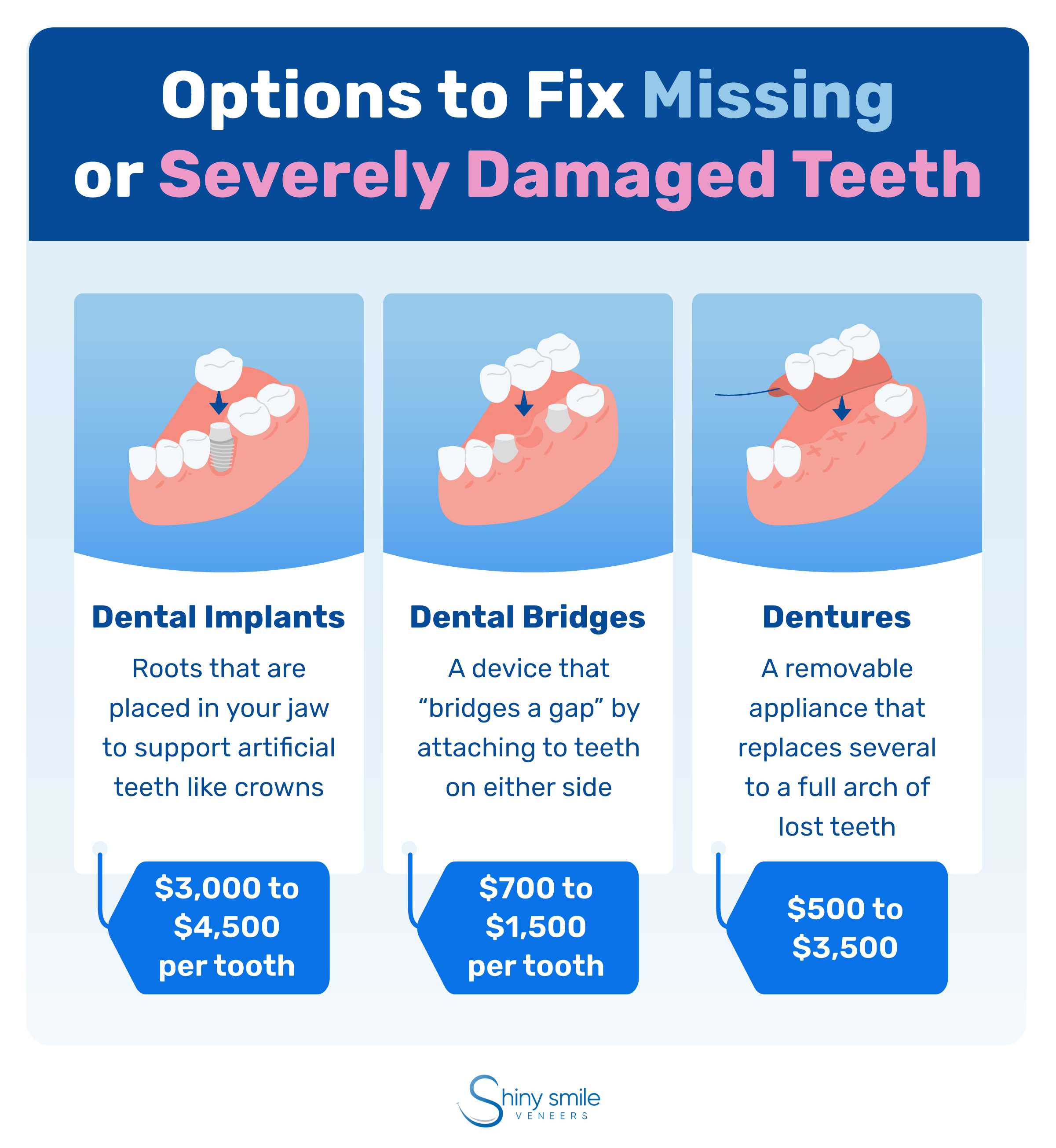
Dental implants are a permanent solution for missing teeth.
These artificial tooth roots support crowns, bridges, or dentures. They’re durable, look natural, and can prevent bone loss.
The cost is steep, between $3,000 and $4,500 per tooth, but implants can last a lifetime.
Bridges are another tooth replacement option and fill gaps by anchoring to nearby teeth.
Whether supported by crowns or implants, they are a durable and affordable option for filling gaps.
Bridges can last up to 15 years and cost $700 to $1,500 per tooth.
Dentures are the classic solution for missing teeth. Whether you need a full or partial set, dentures offer an affordable way to restore your smile.
They range in cost from $500 to $3,500 and need to be replaced or adjusted every five years.
You may not be struggling with a cavity or discoloration, but crooked teeth may be just as annoying.
Thankfully, there are several options for you to fix and align your teeth.
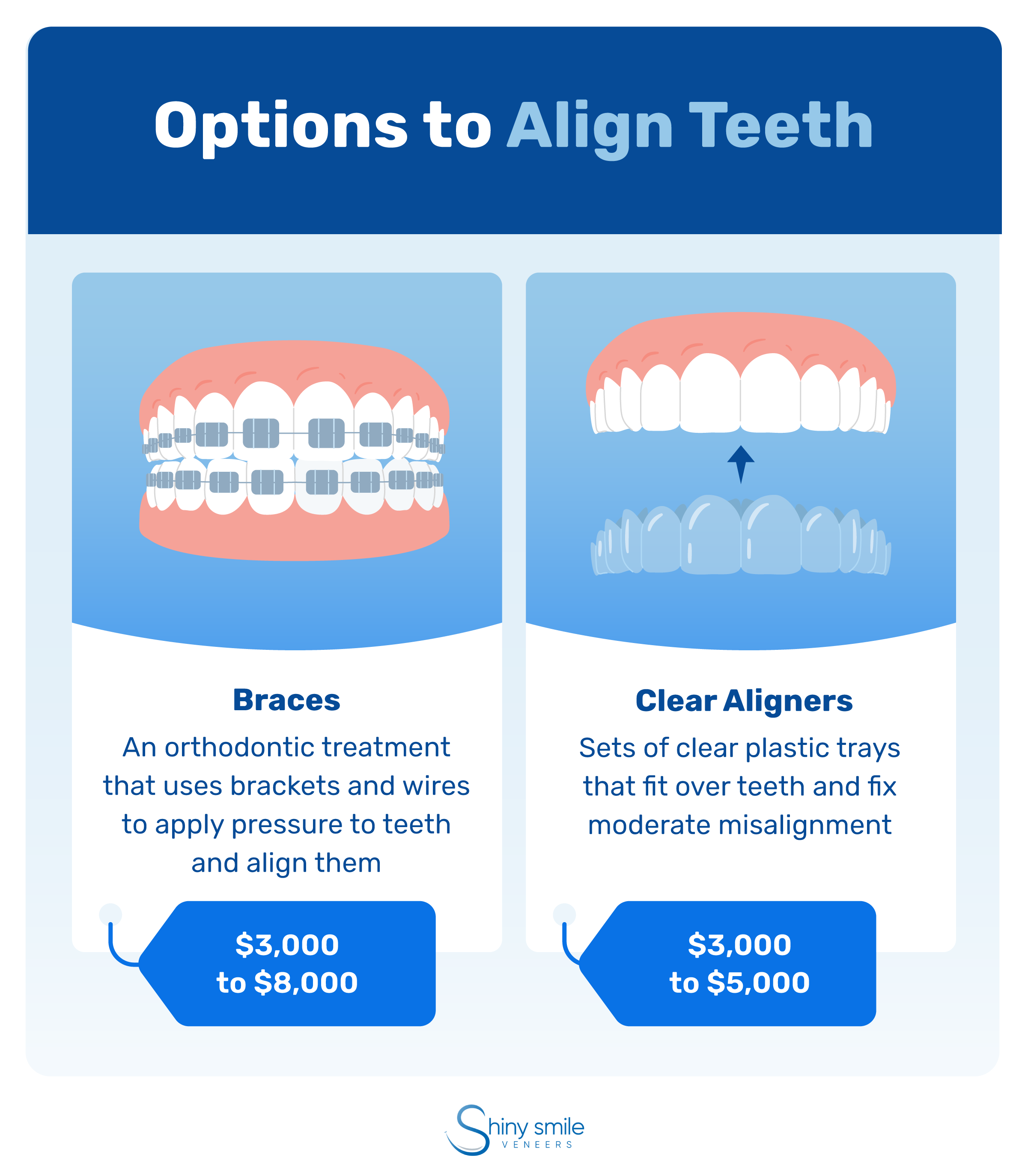
Braces are one of the most common and reliable options to align teeth. Traditional metal braces consist of brackets fixed to the front of your teeth, connected by a wire that gradually tightens to move your teeth into place.
There are also more discreet types, such as ceramic braces that blend in with your teeth and lingual braces, which are attached to the back of your teeth. Self-ligating braces offer a more comfortable experience by reducing friction during adjustments.
No matter what kind of braces you wear, you will need them for about one to three years and they’ll cost about $3,000 to $8,000.
Clear aligners, like Invisalign, as well as alternatives like ClearCorrect and SureSmile, are made out of clear plastic so that they’re less noticeable than normal braces.
They consist of clear, plastic trays custom-made to fit over your teeth and gradually correct their alignment. Unlike braces, they are removable and can be taken out for eating or special occasions.
However, clear aligners may not be the best choice for more complex alignment issues.
Invisalign costs $3,000 to $5,000 on average in the US, but the cost depends upon your needs.
When considering how to fix bad teeth, be cautious about quick fixes that may sound too good to be true.
Products like over-the-counter veneers or bargain dentures can sometimes offer subpar results, leaving you with discomfort or even worsened dental issues.
Always consult a dentist before undergoing any treatment, especially those that seem cheap or DIY-friendly.
While you may be tempted to try fixing bad teeth at home, many severe dental issues require professional attention.
We’ll give you a reliable smile upgrade without breaking the bank.
Yes, modern dentistry offers a range of solutions to fix really bad teeth, from veneers to implants, that can fix even the most damaged teeth.
Modern dentistry offers numerous solutions based on your needs and budget. For quick, non-invasive coverage, consider snap-on veneers. If you’re looking for a more permanent fix for damaged teeth, options like crowns or dental implants may be suitable. Clear aligners or braces can also help if alignment is an issue.
Rotting teeth often require a root canal or extraction followed by a crown or implant.
For those wondering how to fix bad teeth with no money, explore dental schools, charity clinics, or financing plans that can offer reduced or free care.
Yes, with treatments like crowns, root canals, and implants, even severely damaged teeth can be saved.
Fixing bad teeth doesn’t have to be complicated or expensive.
From affordable snap-on veneers for quick, non-invasive coverage to dental implants for a permanent solution, there’s a path for every budget and need. Crowns are perfect for restoring damaged teeth, while clear aligners handle alignment issues discreetly.
No matter your dental challenge, there’s a solution out there. If you’re looking for a simple, hassle-free way to boost your smile, consider snap-on veneers. They offer a fast and cost-effective way to regain confidence. Ready to make a change? Shop Shiny Smile Veneers today.