Cracked smile? Chipped confidence?
Veneers might be your ticket to a knockout grin.
But before you open your wallet, let’s crack the code on veneer costs. From porcelain to snap-ons, we’re breaking down every dollar and detail to help you transform your smile.
- Porcelain veneers range from $900 to $2,500 per tooth; composite veneers cost less but have shorter lifespans.
- Options include porcelain, composite, Lumineers, and snap-on veneers, each with different price points and benefits.
- Additional costs include pre-treatment, post-procedure adjustments, and potential future replacements, adding to long-term expenses.
Price Overview: Types of Veneers and Their Costs
| Type of Veneer | Price Range |
|---|---|
|
Porcelain Veneers |
$900 – $2,500 per tooth or $7,200 – $20,000 for a full set |
|
Composite Resin Veneers |
$250 – $1,500 per tooth or $2,000 – $12,000 for a full set |
|
Lumineers (No-Prep) |
$800 – $2,000 per tooth |
|
Snap-On Veneers |
$300 – $2,500 for a full set |
|
Palatal Veneers |
$900 – $2,500 per tooth |
|
Temporary Veneers |
$100 – $500 per tooth |
How Much Do Dental Veneers Cost?
The average veneer cost per tooth ranges from $900 to $2,500 for porcelain and $250 to $1,500 for composite resin.
Why the difference? It’s all about durability and aesthetics.
Porcelain veneers look natural, resist staining, and last longer, often over 10 years. Composite veneers are less expensive but aren’t as durable or stain-resistant.
Full Set vs Two Front Teeth
If you’re considering a full set of veneers cost in the USA, expect to pay between $7,200 and $20,000 for porcelain and $2,000 to $12,000 for composite.
Need a smaller fix? The veneers cost for 2 front teeth ranges from $500 to $5,000 depending on the material.
Types of Veneers
1. Porcelain Veneers
Best For: Long-term smile makeovers
Think of porcelain veneers as the Rolls-Royce of the dental world. They’re custom-made to match your teeth and look natural.
These ultra-thin shells are stain-resistant and can last up to 20 years with good care.
However, their quality and longevity come with a premium price tag.
Downside
- Expensive
- Needs enamel removal
Price: $900 – $2500 per tooth or $7,200 to $20,000 for a full set of eight top teeth.
2. Composite Resin Veneers
Best For: Small repairs like chipped teeth or gaps.
If porcelain veneers are the luxury option, composite resin veneers are your budget-friendly alternative.
Made by sculpting resin directly onto your teeth, these are ideal for minor corrections. Keep in mind though, they only last 5 to 7 years and are more likely to stain.
Downside
- Less durable
- Needs regular maintenance
Price: $250 to $1,500 per tooth or $2,000 to $12,000 for a full set
3. Lumineers (No-Prep Veneers)
Best For: Cosmetic touch-ups without major prep work.
Lumineers are ultra-thin, minimally invasive veneers that don’t require shaving down your natural teeth.
They’re an option if you’re nervous about committing to permanent changes. Lumineers are durable and natural-looking, but they can’t address major dental issues.
Downside
- Limited to mild to moderate imperfections
- Less durable than porcelain veneers
Price: $800 to $2,000 per tooth
4. Snap-On Veneers
Best For: Special occasions and covering gaps or missing teeth.
Not ready to take the plunge with permanent veneers? Affordable snap-on veneers are your go-to for temporary, budget-conscious fixes.
These removable veneers are custom-made to fit over your existing teeth, perfect for events or short-term improvements. Most come in various shades for the ideal color match.
Downside
- Limited durability
Price: $300 to $2,500 for a full set
5. Palatal Veneers
Best For: Treating tooth wear or structural issues.
Unlike the more common veneers that improve the appearance of the front of your teeth, palatal veneers repair the back surfaces.
These are rarely used but usually address issues caused by grinding or acid erosion.
Downside
- Limited cosmetic benefits
- Highly specialized treatment
Price: $900 to $2,500 per tooth
6. Temporary Veneers
Best For: Bridging the gap between appointments for permanent veneers.
Waiting for your permanent veneers to be made? Then your dentist will probably give you temporary veneers made from resin or acrylic.
They let you maintain the function and appearance of your teeth but are designed for short-term use only while you wait.
Downside
- Not durable
- Short-term use only
Price: $100 to $500 per tooth
Hidden Veneer Costs to Be Aware of
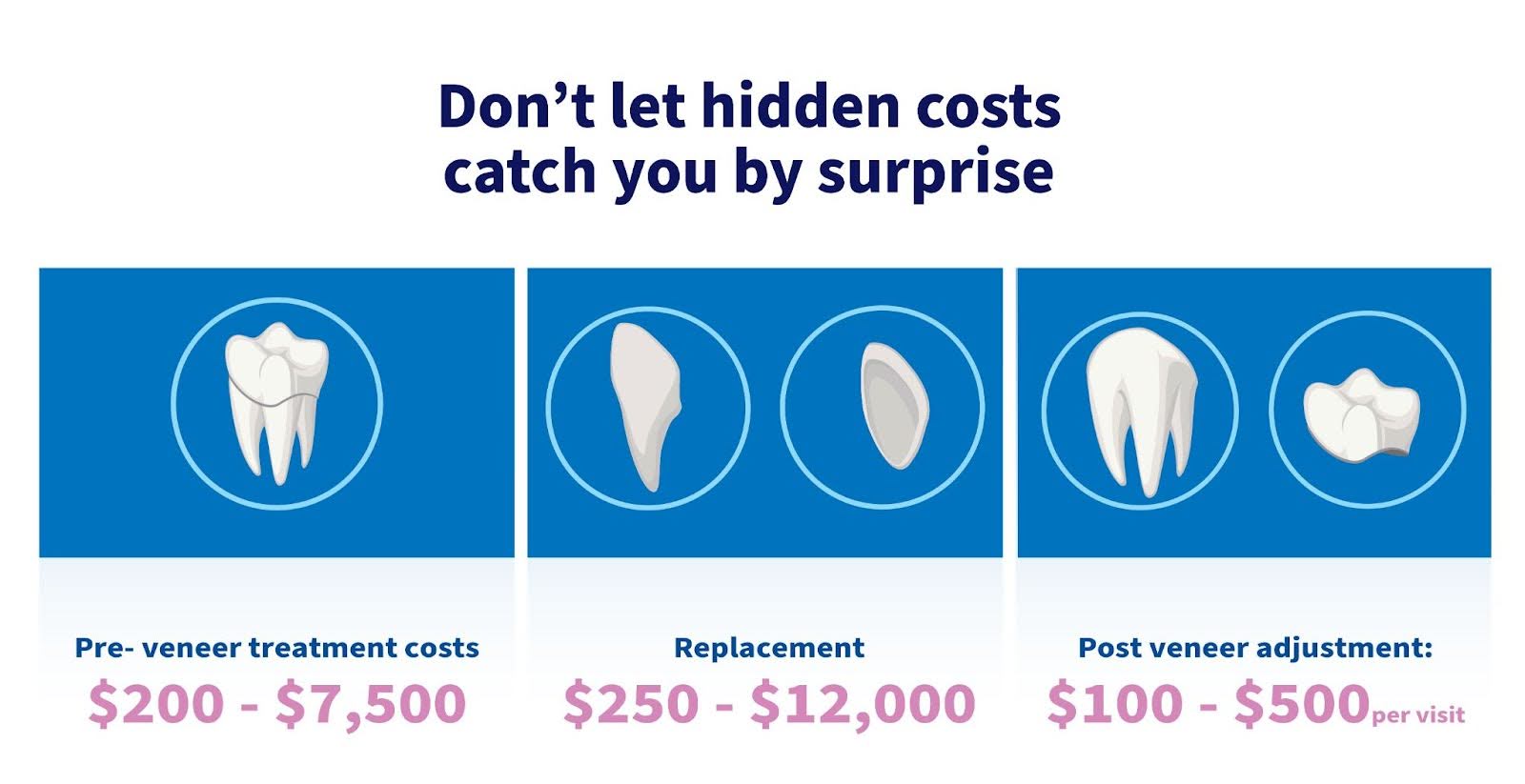
While veneers transform your smile, there are a few expenses that might catch you off guard.
Here’s what to be aware of:
1. Pre-Veneer Treatments
Before starting your dental veneers journey, your teeth must be healthy. Veneers are applied, your teeth need to be in good health.
Any issues like cavities, gum disease, or root canals have to be addressed and this can add hundreds or even thousands of dollars to your overall cost.
2. Replacement and Maintenance Costs
Consider the replacement cost of veneers. They can chip, crack or simply need replacement.
Even with porcelain veneers, replacements might be necessary after 10-20 years, adding another significant expense to your long-term dental budget.
3. Post-Veneer Adjustments
Budget for potential veneers post-procedure adjustments. After getting your veneers you might need this for a perfect fit.
These follow-ups aren’t always included in the initial cost and can lead to extra fees.

Insurance and Financing
Insurance coverage often falls short when covering the cost of veneers. This is because many dental insurance plans treat veneers as a cosmetic procedure.
But there’s hope:
Partial Coverage
Some plans might offer partial coverage if there’s a medical necessity, like a chipped or damaged tooth.
Financing Options
If you’re floored at the cost of veneers financing options are a lifesaver. Many dentists partner with third-party companies offering easy, low-interest payment plans.
This allows you to break down the price of veneers into smaller monthly payments instead of paying it all upfront.
CareCredit
Another option is CareCredit, a healthcare financing service that helps manage veneer procedure costs.
When evaluating the cost of veneers for a full mouth or a set of veneers, these financing solutions can help you manage those big expenses.
Comparative Costs of Alternative Treatments
Wondering if there’s a cheaper alternative to veneers? Here are your options:
Teeth Whitening
Whitening your teeth won’t address issues like gaps or chips, but it can shine up your pearly whites.
Price: From $200 to $1,000 depending on the method.
Dental bonding
This involves applying a tooth-colored resin to fix minor imperfections.
Price: $200–$600 per tooth.
Braces or Invisalign
A good choice for complex cases, like gap teeth or misalignment. Price: $3,000 to $7,500.
Frequently Asked Questions
How much is a full set of veneers?
A full set of veneers, usually 8 teeth, cost between $7,200 to $20,000 for porcelain and $2,000 to $12,000 for composite in the USA.
What is the cost of veneers for top teeth?
The cost for a full set of upper veneers is about $7,200 for porcelain or $2,000 for composite.
How expensive are veneers for 6 teeth?
For 6 teeth, porcelain veneers cost $5,400 to $15,000. Composite options range from $1,500 to $9,000.
What is the average cost of veneers per tooth?
The veneer price per tooth is $900 to $2,500 for porcelain and $250 to $1,500 for composite.
Conclusion
Porcelain veneers offer lasting beauty at $900-$2,500 per tooth, while composite options provide affordable fixes starting at $250.
Remember to factor in pre-treatment costs, future maintenance, and potential replacements. Though insurance typically considers veneers cosmetic, financing options like CareCredit can help manage payments.
For those seeking a risk-free trial or budget-friendly solution, snap-on veneers deliver the confidence boost you’re after without the permanent commitment. Ready to test-drive your new smile? Shop our snap-on veneers – they’re a fraction of the cost of permanent options and let you preview your future grin before making a bigger investment.